September and early fall are an important transition period for Okanagan landscapes. The hottest part of summer may be behind us, but there is still time to tackle maintenance, repairs and property improvements before freezing temperatures arrive.
For homeowners, this is a good opportunity to look beyond simply cleaning up leaves. Irrigation, drainage, grading, damaged landscaping and unfinished hardscaping can all create problems if they’re left until spring.
Here are some of the areas worth looking at before winter arrives.
Check Your Irrigation Before You Shut It Down
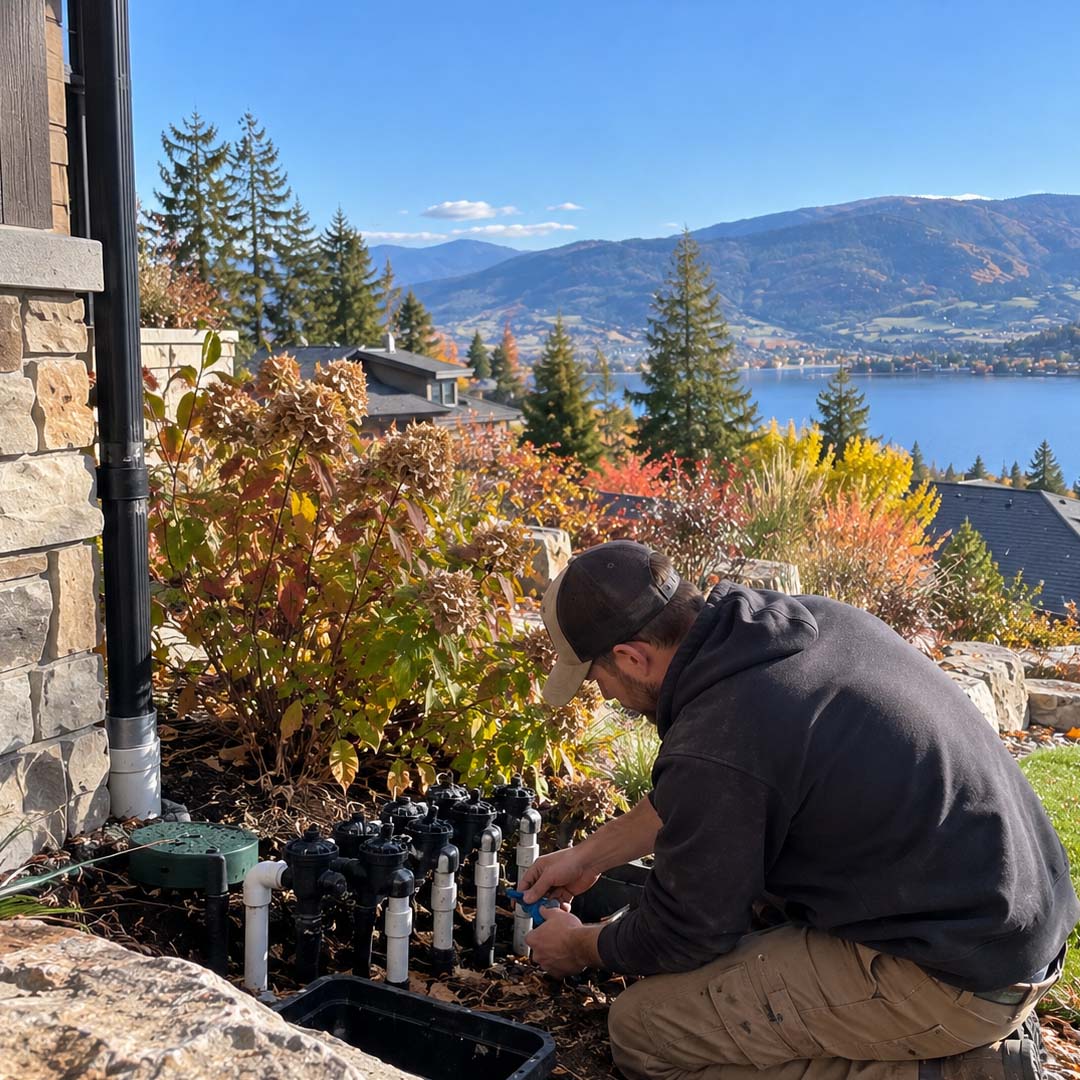
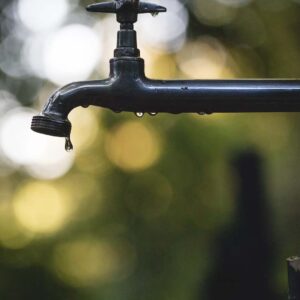
After a long Okanagan summer, irrigation systems deserve a closer look before they’re winterized.
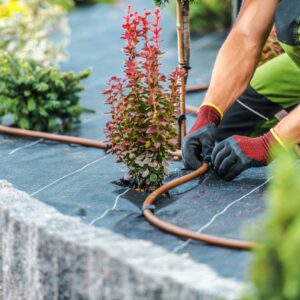
Check for broken or damaged sprinkler heads, leaking lines, areas that haven’t been receiving enough water and zones that aren’t operating correctly. Small problems are much easier to identify while the system is still running than after it has been shut down for the season.
If your landscape struggled during the heat and smoke this summer, our article on How Wildfire Smoke and Summer Heat Affect Your Okanagan Landscape also explains some of the stresses your lawn, trees and gardens may have experienced.
Once watering is no longer required, make sure the irrigation system is properly winterized before temperatures drop below freezing.
Deal With Drainage Problems Now
Did you notice water collecting beside the house, washing soil down a slope or pooling in sections of the yard this year?
Don’t forget about it just because the weather has become cooler.
Fall and spring precipitation, followed by snowmelt, can expose drainage and grading problems very quickly.
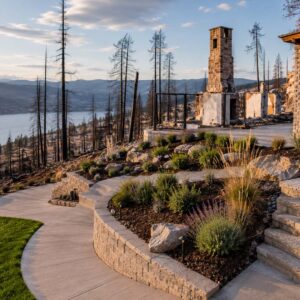
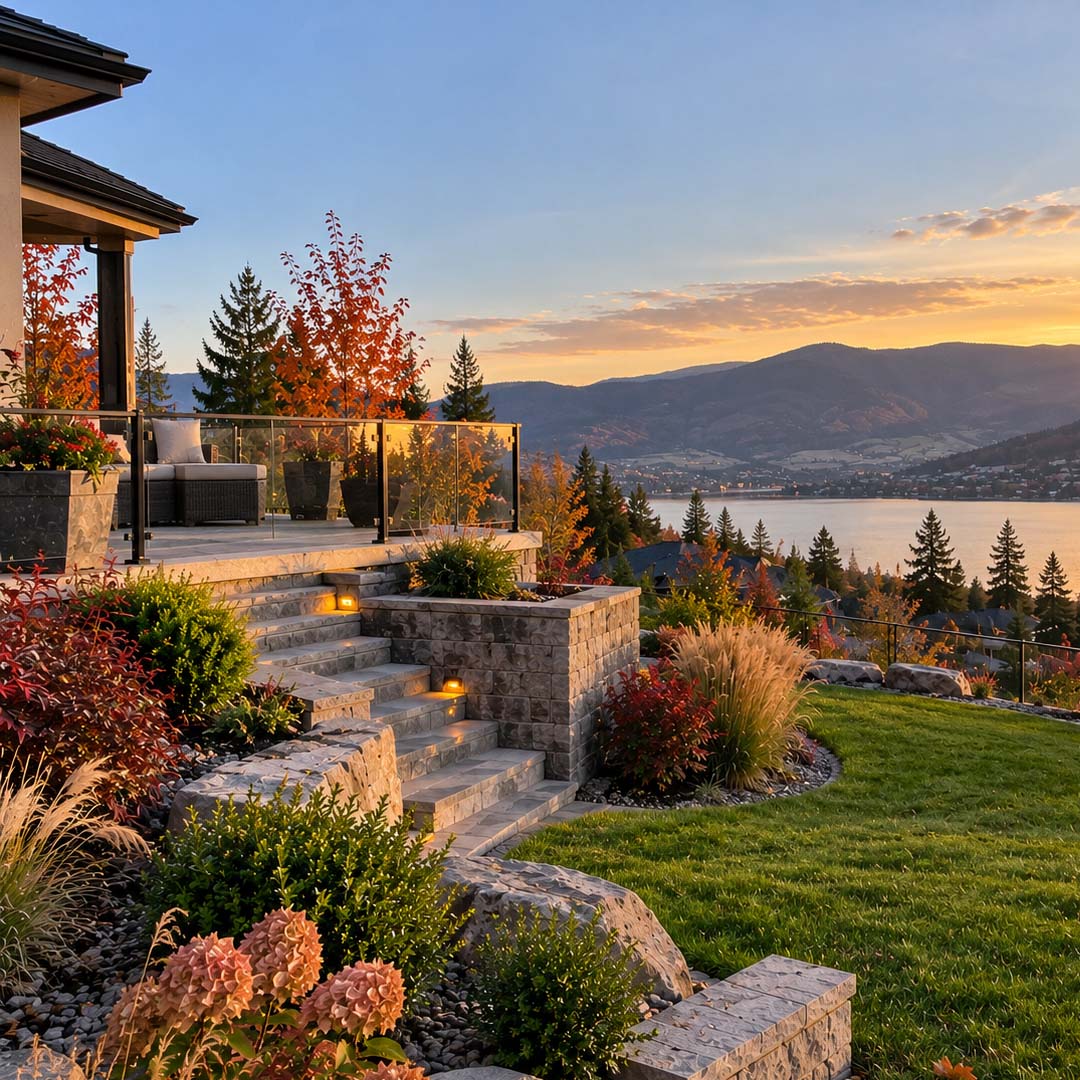
Depending on the property, correcting the issue might involve changing the grade, installing drainage, improving soil conditions or incorporating a retaining wall to help stabilize a slope.
Addressing drainage before winter can also help protect patios, walkways and other hardscaping from unnecessary water and freeze-thaw damage.
Inspect Retaining Walls
Take a walk around your property and look closely at existing retaining walls.
Watch for leaning, bulging, cracking, separating blocks, erosion around the base or water appearing where it shouldn’t.
Retaining walls rarely develop serious problems overnight. Small changes can provide an early warning that drainage or movement behind the wall needs attention.
Our guide to Signs Your Retaining Wall May Be Failing in Kelowna explains what homeowners should watch for in more detail.
Finish Excavation and Grading Work
If you’ve already started an outdoor project, try not to leave large areas of disturbed soil exposed over winter.
Unfinished grading can allow water to collect in the wrong areas, while loose soil on slopes can be vulnerable to erosion.
This is particularly important on properties affected by wildfire, where vegetation that previously helped stabilize the soil may have been lost. Our Landscaping After Wildfire resource covers some of the additional considerations for fire-damaged Okanagan properties.
Getting the site stable doesn’t necessarily mean completing the entire landscape before winter. Sometimes the priority is simply making sure drainage, grading and erosion control are addressed so the property is in good condition for work to continue in spring.
Take Care of Concrete and Hardscaping Repairs
Fall is also a good time to inspect patios, walkways, stairs and other hard surfaces.
Look for areas that have settled, drainage problems around concrete and pavers that have shifted or become uneven.
If you’re already considering changes to your outdoor space, dealing with excavation and site preparation now may also make the next phase easier.
Fuller’s provides concrete services throughout the Okanagan as part of larger landscape and property improvement projects.
Clean Up Without Stripping the Landscape Bare
Fall cleanup doesn’t have to mean removing every leaf and cutting every plant to the ground.
Remove diseased material, excessive debris and anything that could create problems, but consider leaving appropriate plant material where it can provide winter protection or habitat.
Mulch can also help protect soil and plant roots while reducing moisture loss.
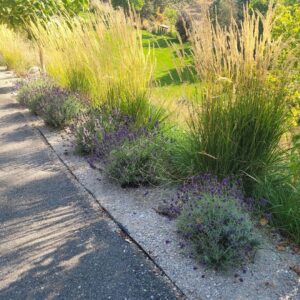
If reducing maintenance is one of your goals for next year, take a look at our Low-Maintenance Landscaping Ideas for Okanagan Homes before deciding what to change.
Look at Trees and Fire-Damaged Vegetation
Properties affected by wildfire require some additional attention.
Trees that appear intact can still have suffered significant heat or root damage. Burned or unstable trees near homes, driveways and outdoor living areas should be professionally assessed rather than assuming they’re safe because they’re still standing.
Fire-damaged properties may also have exposed soil, damaged irrigation and changed drainage patterns that should be addressed before winter.
If you’re rebuilding after wildfire, our Okanagan wildfire landscape restoration guide is a good place to start.
Start Thinking About Spring Now
You don’t necessarily need to build everything this fall.
But September and October are excellent months to identify what needs to happen next.
If you’re considering a new patio, retaining wall, irrigation changes, major planting, grading or a complete landscape renovation next year, assessing the property now gives you time to determine priorities and establish the correct order of work.
That is particularly valuable for larger projects involving several Fuller’s services. Excavation, retaining walls and drainage usually need to happen before irrigation, planting and finishing work.
Get Your Property Ready for Winter
A little work in the fall can prevent much larger problems from appearing in spring.
Fuller’s Landscape Company works with homeowners throughout Kelowna and the Okanagan on landscaping, excavation, grading, drainage, retaining walls, concrete and complete outdoor property improvements.
If there are areas of your property you’d like to repair or improve before winter, contact Fuller’s Landscape Company for an estimate.
FAQ
When should irrigation systems be winterized in the Okanagan?
Irrigation should be winterized before sustained freezing temperatures can damage lines and components. The appropriate timing varies with fall weather conditions, so don’t rely solely on a particular calendar date.
Can landscaping still be done in September and October?
Yes. Many excavation, grading, drainage, hardscaping and landscape projects can continue during the fall, depending on weather, soil conditions and the type of work being completed.
Should I fix drainage problems before winter?
If possible, yes. Poor grading or drainage can become more problematic with fall precipitation, snow and spring snowmelt. An assessment can help determine whether the problem requires grading, drainage improvements or another solution.
Should wildfire-damaged landscaping be dealt with before winter?
Safety concerns, unstable trees, erosion, drainage and exposed soil should be priorities. The entire landscape does not necessarily need to be rebuilt immediately, but stabilizing the property can help prevent additional damage.
Is fall a good time to start preparing for a spring landscaping project?
Yes. Assessing the site in fall can identify drainage, grading, excavation and retaining-wall requirements before the final landscaping is designed or installed.