
Soil Testing
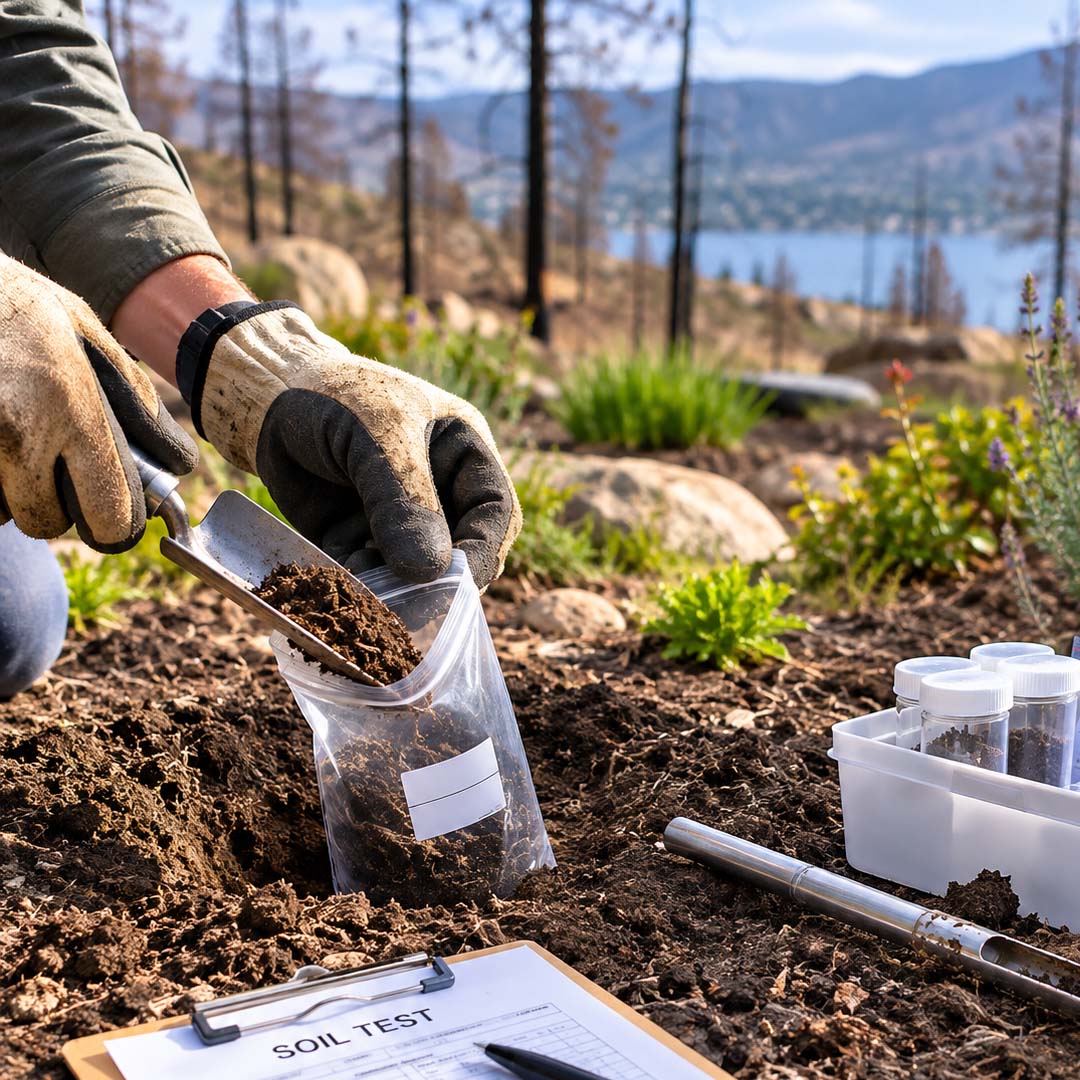
Wildfire can change the condition of the soil throughout your property. Intense heat, loss of vegetation, ash and debris, erosion, firefighting activity and heavy equipment used during cleanup can all affect areas differently. Before investing in new lawns, gardens, trees or other landscaping, it is important to understand what you are working with below the surface.
Soil testing can help identify nutrient levels, pH and other conditions that may affect how successfully new plants establish. In areas where there are concerns about contamination or potentially hazardous materials following a structure fire, specialized environmental testing may also be appropriate before landscaping work begins.
Testing is only part of the assessment. We also look at the physical condition of the site, including compaction, drainage, erosion, remaining organic matter and whether topsoil has been lost or disturbed. In some cases, existing soil can be amended and reused. In others, removing damaged material and bringing in suitable soil may provide a better foundation for rebuilding.
Before Replanting
Resist the temptation to immediately replace everything that was lost. A beautiful new landscape will struggle if the soil underneath it cannot properly support plant growth or manage water.
Depending on the property, restoration may involve:
- Testing and assessing existing soil
- Removing debris and unsuitable material
- Relieving soil compaction
- Adding new topsoil or organic matter
- Correcting grading and drainage problems
- Rebuilding irrigation
- Selecting plants appropriate for the site’s new conditions
Taking care of these fundamentals first gives lawns, trees, shrubs and gardens a much better chance of becoming established and thriving over the long term.
Rebuilding Healthy Soil After Wildfire
Soil recovery doesn’t necessarily happen as soon as the visible fire damage is cleaned up. Reintroducing organic matter, protecting exposed ground from erosion and choosing appropriate plants can all contribute to the long-term recovery of the property.
For homeowners rebuilding after wildfire, this is also an opportunity to create a landscape that is better adapted to Okanagan conditions. Water efficiency, drought tolerance, drainage and FireSmart principles can all be incorporated into the new design rather than simply recreating the landscape that existed before the fire.
Fuller’s Landscaping can help assess the condition of your property and determine what site preparation should be completed before rebuilding begins. Contact us if you need help determining the next steps for your wildfire-affected landscape.