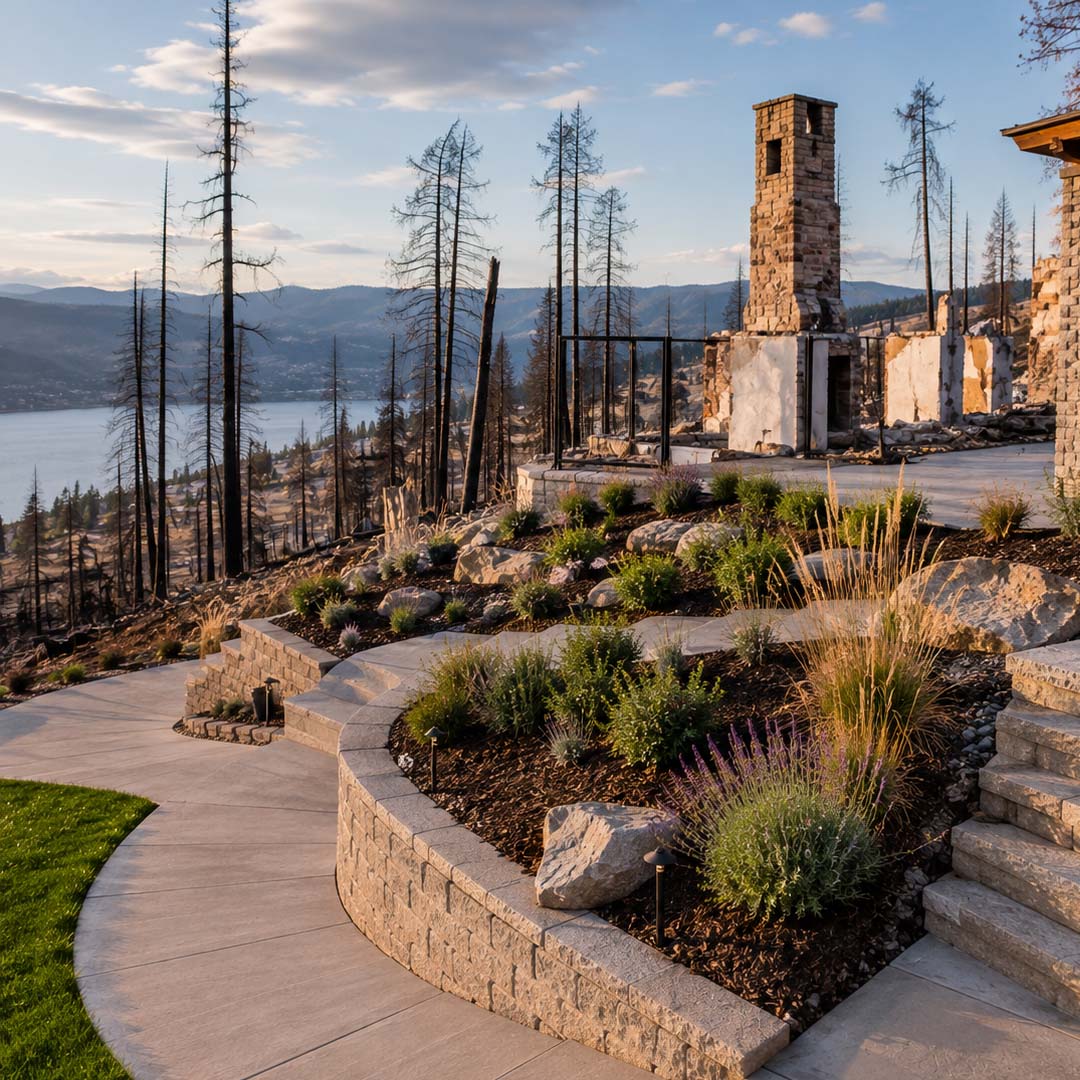
Searching for fire restoration companies near me after a wildfire can quickly become overwhelming. Depending on the damage to your property, recovery may involve insurance adjusters, environmental professionals, demolition crews, builders, arborists, landscapers, concrete contractors and other specialists. For Okanagan property owners, restoring the land surrounding the home can be a major part of that process. Wildfire can leave behind much more than burned grass and trees. Heat, firefighting activity, heavy equipment and the loss of vegetation can affect soil stability, drainage, slopes, retaining walls, irrigation systems, concrete and access throughout a property. At Fuller’s Landscaping, our focus is on helping homeowners move forward with the exterior restoration of wildfire-affected properties, from cleanup and site preparation through to rebuilding functional, attractive outdoor spaces.
Where Does Landscape Restoration Fit Into Fire Recovery?
The first priority following a wildfire is always safety. Property owners should follow instructions from local authorities, insurers and qualified fire or environmental restoration professionals before entering or beginning work on a damaged property. Once the property has been cleared for appropriate work, attention can turn to assessing what remains and what needs to be rebuilt. This is where choosing the right fire restoration companies near me becomes more complicated. One contractor may handle structural repairs while another deals with environmental hazards. Exterior restoration may require an entirely different set of skills. Fuller’s can assess damage to landscaping, grading, retaining structures, irrigation, hardscaping and other exterior components and help determine the most practical order for rebuilding them.
Start With the Property, Not the Plants
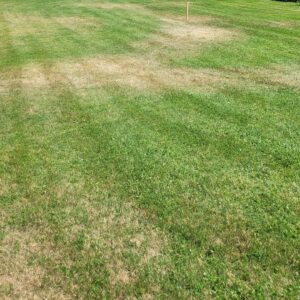
After a wildfire, it’s tempting to begin by replacing burned trees, shrubs and lawns. In many cases, that’s several steps too early. The condition of the land itself needs to be considered first. Vegetation helps stabilize soil and manage water. When it’s lost, previously stable areas can become vulnerable to erosion and runoff. Firefighting vehicles and reconstruction equipment may also compact soil or alter existing grades. Before new landscaping goes in, the property may require excavation, grading, drainage improvements, soil replacement or other site preparation. This is particularly important on the steep and varied terrain found throughout the Okanagan. Our guide to Spring Landscaping in Kelowna: What Should Be Done First? provides additional information about why grading, drainage and soil conditions should be addressed before the finishing stages of a landscape.
Retaining Walls Need to Be Assessed
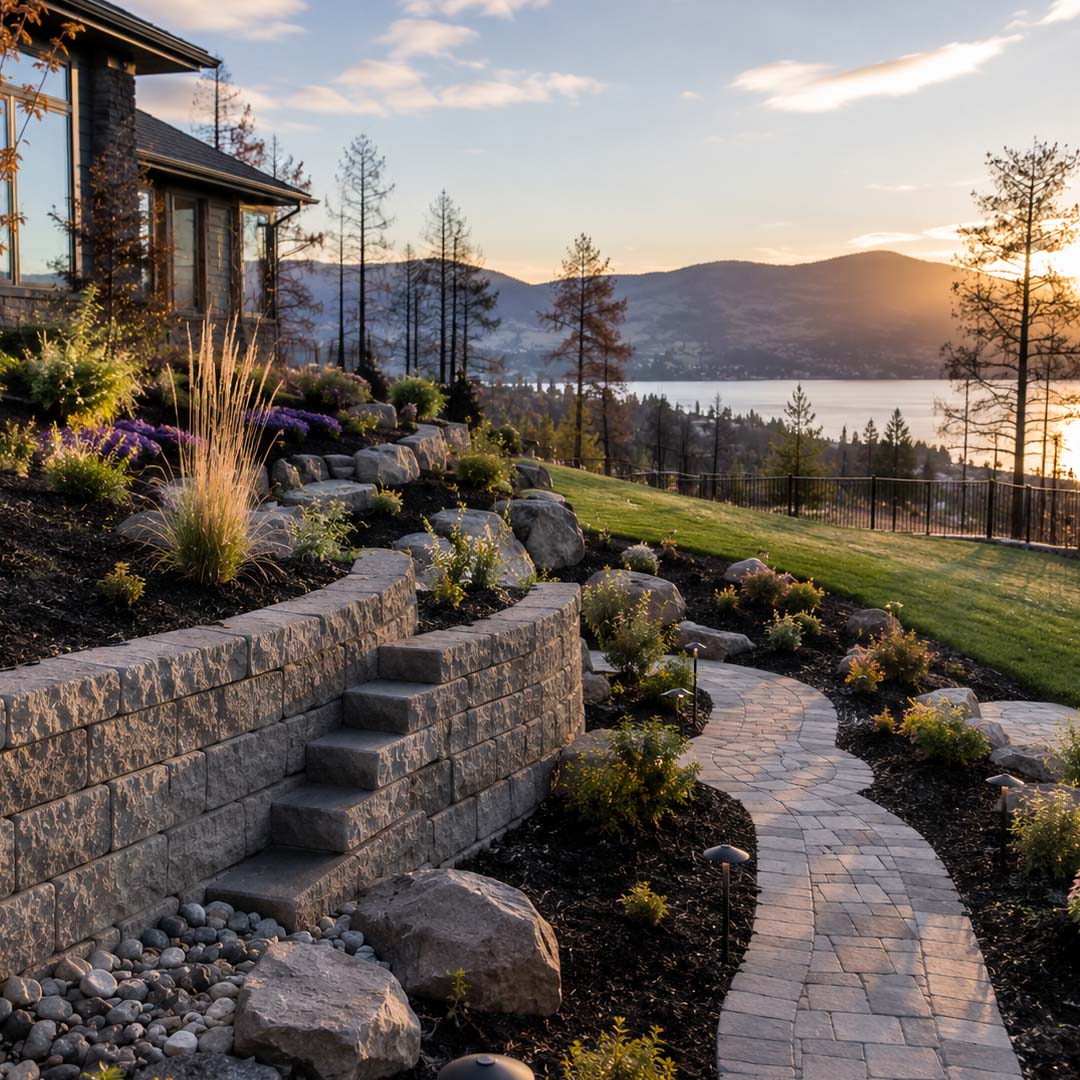
Retaining walls deserve particular attention on wildfire-affected properties. Even when a wall appears to have survived, conditions around it may have changed considerably. Vegetation that previously helped manage runoff may be gone. Drainage systems may have been damaged or clogged, and surrounding soils may have been disturbed by equipment or erosion. Existing walls should be assessed before rebuilding the landscape around them. If replacement or new construction is required, Fuller’s Retaining Wall Services can be incorporated into the overall restoration rather than treated as a separate project later. Property owners can also read Signs Your Retaining Wall May Be Failing in Kelowna for some of the warning signs worth watching for.
Concrete and Hardscaping May Be Part of the Rebuild
Patios, walkways, stairs, curbs and other concrete surfaces can also be affected by wildfire and the recovery work that follows it. Some surfaces may remain perfectly serviceable, while others can be cracked, damaged or disturbed during cleanup and reconstruction. This is another reason to evaluate the entire site before replacing individual components. If a patio needs to be rebuilt, for example, it may make sense to complete grading, retaining walls, underground irrigation and other site work before new concrete is installed. Fuller’s Concrete Services can be coordinated with the landscaping portion of the project, helping create a logical construction sequence and reducing the possibility of finished work having to be disturbed later.
Irrigation Often Needs More Attention Than You Can See
An irrigation system can look intact above ground while having significant problems below it. Heat can damage exposed components, while excavation, vehicles and cleanup equipment can break underground lines. Controllers, valves and wiring may also require inspection. Testing the irrigation system before installing new lawns and planting beds can prevent a frustrating situation where a newly restored landscape has to be dug up to repair damaged infrastructure. It can also be an opportunity to reconsider the original irrigation design and make the new landscape more water efficient.
Rebuilding Doesn’t Have to Mean Recreating the Old Yard
Losing a landscape to wildfire is devastating, but when restoration begins, property owners have an opportunity to reconsider how the space is designed. Rather than automatically recreating everything exactly as it was, the rebuilding process can address problems that existed before the fire. That might mean reducing high-maintenance lawn areas, improving irrigation, correcting drainage, creating more usable spaces on a sloped lot or selecting plants better suited to the Okanagan climate. Our Low-Maintenance Landscaping Ideas for Okanagan Homes article provides some options worth considering when planning the new landscape.
Consider FireSmart Principles During Restoration
Wildfire recovery also creates an opportunity to think about how landscaping immediately surrounding the home can contribute to future resilience. Plant selection, spacing, accumulated combustible material and the placement of certain landscape features can all be considered as part of the redesign. FireSmart BC provides property-specific guidance homeowners can use when making these decisions. The goal doesn’t have to be a bare or unattractive yard. Thoughtful landscape design can balance appearance, usability, water conservation and wildfire considerations. FireSmart BC is an excellent external resource for homeowners who want to learn more about landscaping and property maintenance recommendations for wildfire-prone communities.
Coordinating Restoration Can Make a Difficult Process Easier
One of the challenges after a wildfire is simply the number of moving parts. If you’re searching for fire restoration companies near me, you may actually need several different types of contractors before your property is complete. Having one contractor coordinate multiple exterior components can simplify that portion of the recovery. Fuller’s capabilities across landscaping, retaining walls, concrete, excavation, grading and site preparation mean many exterior elements can be considered together rather than independently. That becomes particularly valuable when one stage affects another. The final landscape shouldn’t be designed until grades are established, and new concrete shouldn’t interfere with drainage or future irrigation. Thinking about the property as one interconnected project helps avoid unnecessary work and expense.
Restoring Wildfire-Affected Properties Across the Okanagan
Wildfire has affected communities throughout the Okanagan, and every damaged property presents a different set of challenges. Some homeowners may need relatively straightforward landscape repairs. Others may be rebuilding substantial portions of their property from the ground up. Fuller’s Landscaping can assess the exterior condition of the property, identify what can potentially remain and develop a practical scope of work for the areas that need to be restored. If you’re searching for fire restoration companies near me because your Okanagan property has been affected by wildfire, contact Fuller’s Landscaping to discuss the exterior restoration work your property requires. We can help with the landscape, grading, retaining walls, concrete and site work needed to begin bringing your outdoor space back.
Frequently Asked Questions
What kind of wildfire restoration work does Fuller’s Landscaping do?
Fuller’s focuses on exterior property restoration, including landscaping, grading, excavation, drainage, irrigation, retaining walls, concrete and related site work. Structural building restoration, hazardous-material remediation and specialized interior smoke or fire restoration may require other qualified professionals.
When can landscaping begin after a wildfire?
The property should first be considered safe for the work being undertaken, and any required assessments, cleanup or structural work should be coordinated appropriately. Exterior restoration often begins with site assessment, grading, drainage and soil work before planting and finishing.
Should a fire-damaged yard be rebuilt exactly as it was?
Not necessarily. Restoration can be an opportunity to improve drainage, irrigation, usability, maintenance requirements and the selection and placement of landscape materials.
Can retaining walls be reused after a wildfire?
Possibly, but existing walls and the conditions surrounding them should be assessed. Changes to vegetation, drainage, soil or slope stability can affect how a retaining wall performs even when obvious damage isn’t visible.
Can Fuller’s handle more than the landscaping?
Yes. Fuller’s also provides retaining wall, concrete and site preparation services, allowing several exterior components of a wildfire restoration project to be coordinated together.