
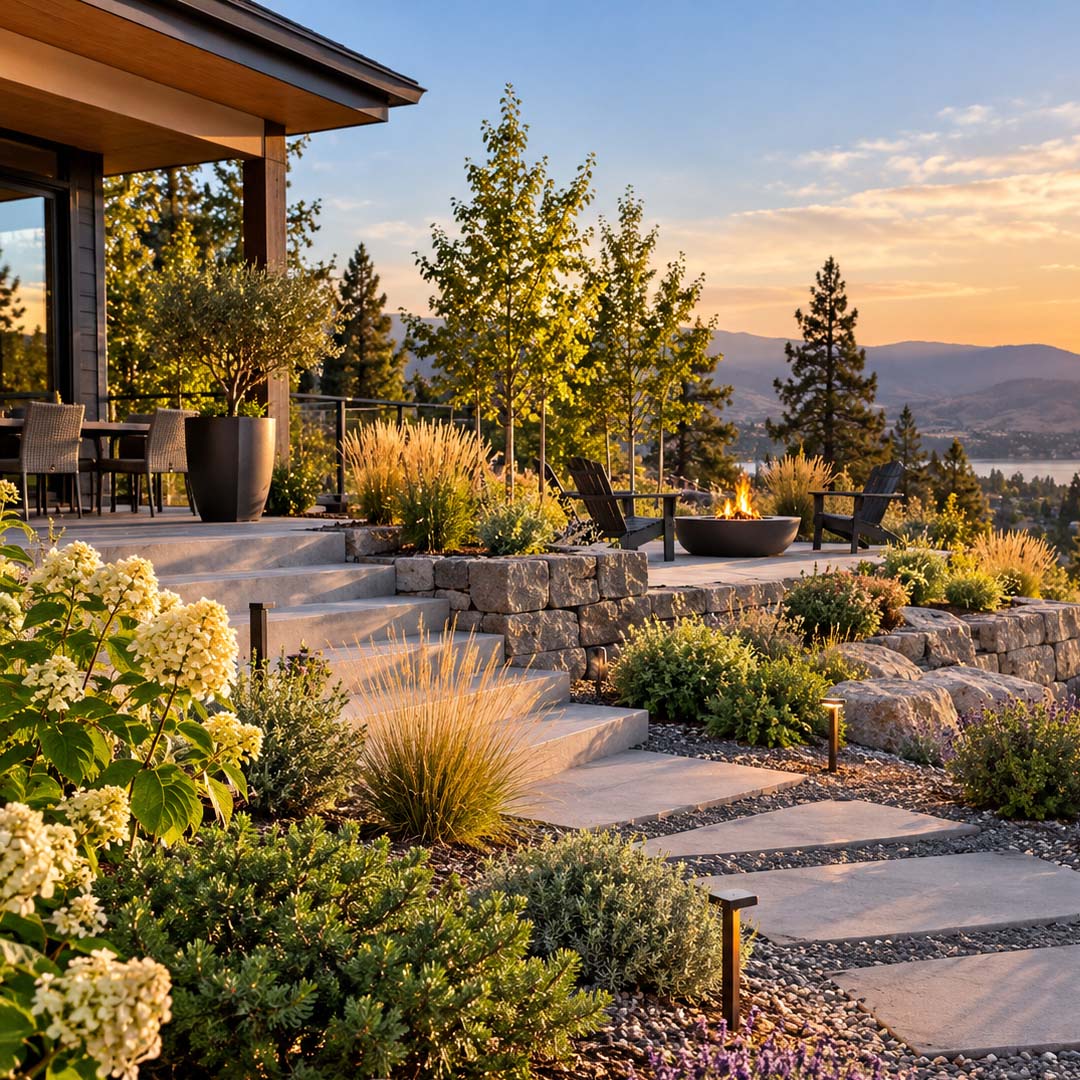
Living in the Okanagan means enjoying beautiful natural surroundings, but it also means being mindful of wildfire risks. Whether you’re restoring a property after a wildfire or making improvements to an existing landscape, thoughtful landscaping choices can help reduce the amount of combustible material around your home.
Fire-resistant landscaping doesn’t mean removing every tree or replacing your entire yard with gravel. It’s about choosing suitable plants, maintaining vegetation, using appropriate materials and creating separation between potential fuel sources and your home.
Create Defensible Space Around Your Home
One of the most important principles of fire-resistant landscaping is creating defensible space. This involves reducing the vegetation and combustible materials that could allow a wildfire to spread toward your home.
FireSmart Canada recommends paying particular attention to the areas closest to your house.
Immediate Zone: 0 to 1.5 Metres
The first 1.5 metres around your home should be kept as free of combustible materials as possible.
Consider:
- Using gravel, stone, concrete or other non-combustible materials immediately beside the house.
- Avoiding bark mulch, firewood and dense shrubs against exterior walls.
- Keeping leaves, needles and other debris away from foundations, decks and stairs.
- Removing vegetation that could ignite and transfer flames to the structure.
This area is especially important because windblown embers can collect and ignite combustible materials close to a building.
Intermediate Zone: 1.5 to 10 Metres
This area can include lawns, garden beds, shrubs and trees, but vegetation should be maintained to reduce the potential for fire to spread.
Keep grass trimmed, remove dead plant material and provide adequate separation between shrubs and trees.
Avoid dense clusters of vegetation that could allow flames to move from one plant to another.
Extended Zone: 10 to 30 Metres
On larger Okanagan properties, managing vegetation farther from the home can help reduce available wildfire fuel.
This may include thinning dense vegetation, removing dead branches and maintaining separation between trees where appropriate.
Any work involving significant tree removal, environmentally sensitive areas or steep slopes should account for local regulations, erosion concerns and professional recommendations.
Choose Plants With Fire Resistance in Mind
No plant is completely fireproof, but some plants are generally less likely to ignite or contribute to intense burning when properly maintained.
Plants with higher moisture content, less resinous material and limited accumulation of dead vegetation may be better suited to areas near homes.
When selecting plants for an Okanagan landscape, consider:
- Drought tolerance and water requirements.
- Mature plant size and spacing.
- The amount of dead material the plant produces.
- Whether the plant contains substantial oils, resins or waxes.
- How easily the plant can be maintained.
Plant selection is only one part of the equation. Even plants considered relatively fire-resistant can become hazardous when they are dry, overgrown or surrounded by dead vegetation.
For homeowners restoring a landscape after wildfire, our Native Plants section also explains why locally adapted vegetation may be worth considering.
Pay Attention to Trees and Shrubs
Mature trees are an important part of many Okanagan properties, providing shade, privacy and visual appeal.
However, branches, shrubs and accumulated debris can create pathways for fire to spread.
Regular maintenance can help reduce these risks.
Remove dead branches, maintain appropriate clearance around structures and avoid allowing shrubs or other vegetation to create a continuous fuel pathway into tree canopies.
Pruning should be appropriate for the tree species and its health. Large trees, damaged trees and work near structures are best assessed by qualified professionals.
For properties affected by wildfire, trees may also require an assessment for structural damage before landscaping work begins.
Use Non-Combustible Materials Where They Matter Most
Hardscaping can play an important role in a fire-resistant landscape.
Features such as concrete patios, stone walkways, gravel areas and retaining walls can create breaks between planted areas and reduce the amount of combustible material surrounding a home.
Consider incorporating:
- Concrete patios and walkways near outdoor living areas.
- Stone or gravel borders between buildings and garden beds.
- Retaining walls to separate changes in elevation and support properly designed landscape areas.
- Paver pathways that provide access through planted sections.
- Non-combustible landscape edging near structures.
These features should be designed with drainage, accessibility and the overall property layout in mind.
Fuller’s Landscape Company provides concrete services and retaining wall construction throughout Kelowna and the Okanagan, allowing these elements to be incorporated into larger landscaping projects.
Keep Your Landscape Maintained Throughout the Year
Even a well-designed fire-resistant landscape requires regular attention.
Okanagan summers can be extremely hot and dry, making routine maintenance particularly important.
Remove fallen branches, dead plants and accumulated leaves. Keep lawns and planted areas appropriately maintained, and inspect irrigation systems for leaks, damaged lines or areas that aren’t receiving adequate water.
Pay particular attention to vegetation near decks, fences, sheds and other structures.
Firewood, lumber and other combustible materials should also be stored away from the home in accordance with current FireSmart recommendations.
Think About Fences, Decks and Other Outdoor Features
Landscaping isn’t limited to plants and garden beds.
Wooden fences, decks, pergolas and other structures can influence how fire moves across a property.
For example, a continuous wooden fence attached directly to a home may create a potential pathway for fire.
When renovating an outdoor space, consider where combustible features connect to buildings and whether non-combustible materials or separation could help reduce the risk.
This is particularly worth reviewing when replacing fencing, building a new patio or undertaking a complete landscape renovation.
Rebuilding After a Wildfire Is an Opportunity to Make Improvements
For homeowners recovering from wildfire damage, restoring the landscape offers an opportunity to reconsider how the property is laid out.
Rather than replacing every feature exactly as it was, consider whether changes to planting locations, drainage, retaining walls, walkways or hardscaping could improve both usability and wildfire resilience.
Every property is different. Sloped terrain, existing vegetation, access requirements and proximity to natural areas can all influence the work involved.
Our Landscaping After Wildfire resource provides additional information about restoring damaged outdoor spaces, including soil testing, erosion control and landscape recovery.
Fire-Resistant Landscaping in Kelowna and the Okanagan
Creating a more fire-resistant landscape doesn’t have to mean sacrificing the appearance of your property.
With thoughtful planting, regular maintenance and well-placed hardscaping, homeowners can create outdoor spaces that are attractive, practical and better prepared for wildfire conditions.
Fuller’s Landscape Company works with homeowners throughout Kelowna and the Okanagan on landscaping, excavation, grading, retaining walls and concrete projects.
Contact Fuller’s Landscape Company to discuss improvements to your outdoor space.
Fire-resistant landscaping can help reduce wildfire risk, but it cannot eliminate it. For current recommendations and property-specific guidance, consult FireSmart BC, your local fire department and applicable municipal requirements.