
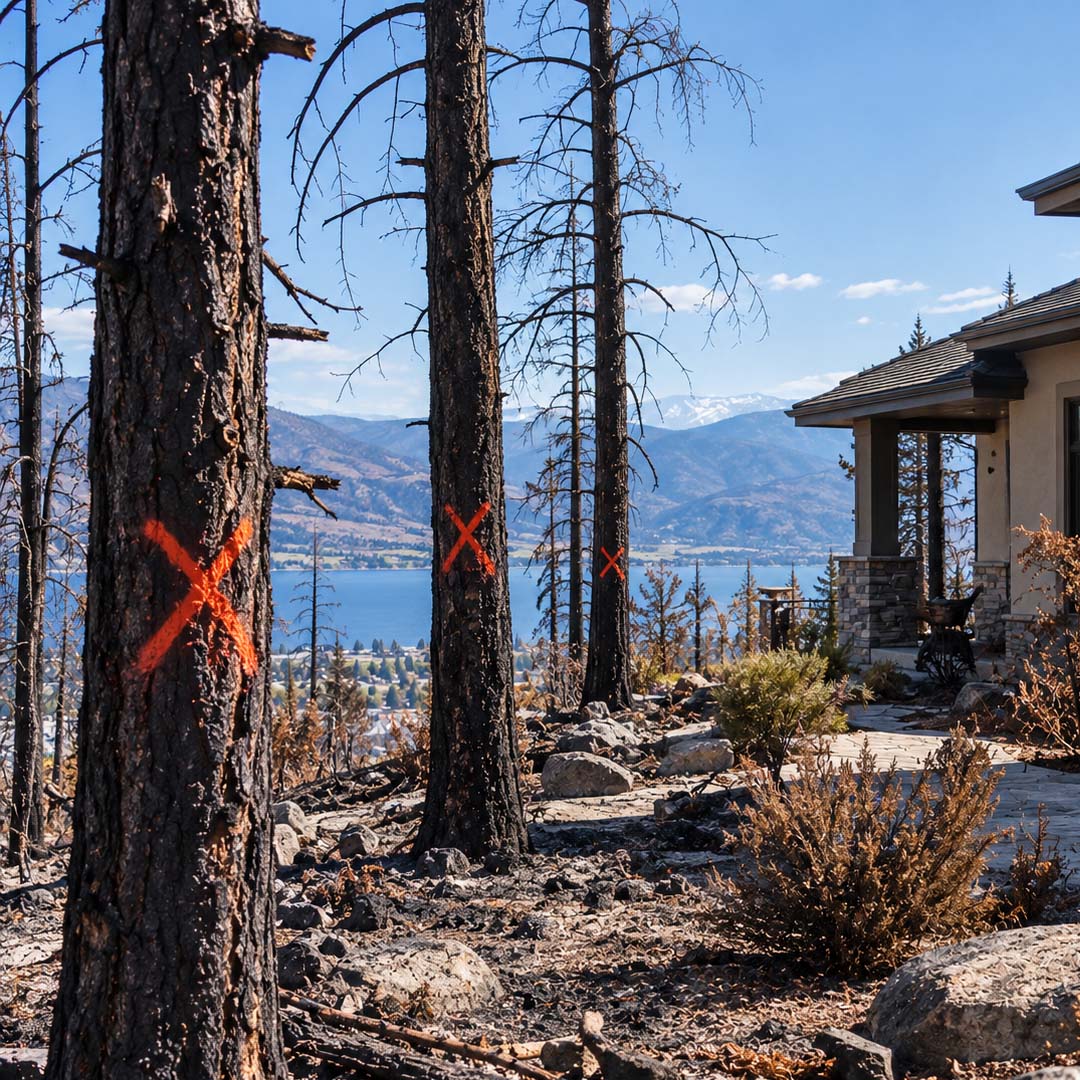
Rebuilding a landscape after a wildfire provides an opportunity to reconsider what is planted around your home and how those plants are arranged. Native and climate-adapted plants can be particularly well suited to Okanagan properties because they are accustomed to our hot, dry summers and seasonal growing conditions.
Once established, many appropriate native species require less supplemental water and maintenance than plants that are poorly suited to our climate. They can also help restore vegetation to areas where fire, cleanup or erosion has left soil exposed.
Choosing Plants for Okanagan Conditions
Choosing the right plant involves more than simply selecting something labelled drought tolerant. Sun exposure, soil conditions, irrigation, elevation and the location of the plant within the property should all be considered.
Depending on the site, a restored landscape may incorporate a combination of native and other climate-appropriate:
- Trees and shrubs
- Perennials
- Ornamental grasses
- Groundcovers
- Drought-tolerant plants
The goal is to create a landscape that can become established successfully without requiring excessive irrigation or ongoing maintenance.
Native Doesn’t Automatically Mean Fire Resistant
This is an important distinction for homeowners rebuilding after wildfire.
No plant is completely fireproof, and simply choosing a native species does not make a landscape resistant to wildfire. How vegetation is located, spaced and maintained around the home is extremely important.
Dry grasses, dead branches, accumulated leaves and dense vegetation can all provide fuel regardless of whether the plants are native.
When rebuilding near a home, consider FireSmart landscaping principles including appropriate plant selection, spacing vegetation, removing combustible debris and creating separation between vegetation and structures.
FireSmart BC is an excellent resource for homeowners looking for information about landscaping and vegetation around homes in wildfire-prone areas.
Think Beyond Individual Plants
A wildfire-resilient landscape should be considered as a complete system.
Planting beds, irrigation, hardscaping, retaining walls, pathways and open areas can all influence how vegetation is distributed around a property. Rather than recreating exactly what existed before the fire, rebuilding provides an opportunity to reconsider the entire layout.
For example, areas immediately surrounding a home may benefit from less combustible landscaping and greater use of appropriate hardscape, while vegetation can be thoughtfully located farther from structures.
Restoring a Landscape After Wildfire
Before extensive planting begins, make sure the property itself is ready.
Soil condition, erosion, grading, drainage and irrigation should all be assessed first. Newly installed plants are unlikely to perform well if they’re being planted into badly compacted soil, unstable slopes or areas where water no longer drains correctly.
If you haven’t already, read our Soil Testing After Wildfire section for more information about assessing the ground before rebuilding.
Rebuilding for the Okanagan
The goal after a wildfire isn’t simply to make a property green again as quickly as possible. It’s to create a landscape that makes sense for the property, the Okanagan climate and the way the space will be used in the years ahead.
Fuller’s can help with the complete exterior restoration process, from site preparation, grading and irrigation through to retaining walls, hardscaping and planting.
If you’re rebuilding a fire-affected property, contact Fuller’s Landscape Company to discuss your site and the next steps.